


Evoked Potentials
Evoked potentials are a non-invasive test used to study neuronal electrical activity. They are used to verify that the nervous system is functioning correctly in response to external stimuli. These stimuli can be visual, auditory, or tactile.
To perform the test we use surface electrodes that are placed on the head, neck, or back. Then, we stimulate with lights, noise or electrical stimuli to capture signals that are amplified so they can be studied and analyzed.
Un estudio de potenciales evocados se realiza con electrodos superficiales, que se pueden colocar en cabeza, cuello o espalda. Las señales captadas se amplifican para que puedan ser estudiadas y analizadas.
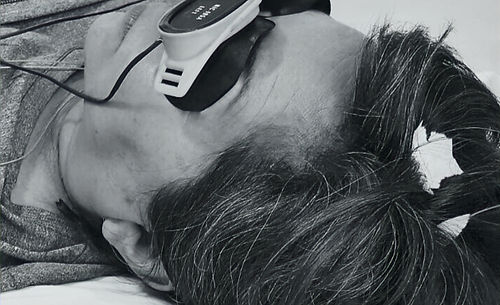
Existen distintos tipos de potenciales evocados, dependiendo del estímulo que se utiliza: Potenciales evocados visuales (PEV), potenciales evocados somatosensoriales (PESS), potenciales evocados auditivos (PEA).
What is the purpose of the Evoked Potentials?
These types of studies can identify neurological lesions in many areas of the nervous system. They can also help monitor diagnosed conditions such as multiple sclerosis, spinal cord injuries, neuropathies, head trauma, deafness, etc.
¿Qué detecta el Estudio?
La realización de este estudio contribuye para el diagnóstico de:
-
Optic neuritis (inflammation of the optic nerve that can cause vision loss)
-
Multiple sclerosis
-
Hearing loss
-
Head injuries
-
Various types of neuropathies
-
Tumors
-
Injuries to the spinal cord or brainstem
-
Metabolic disorders
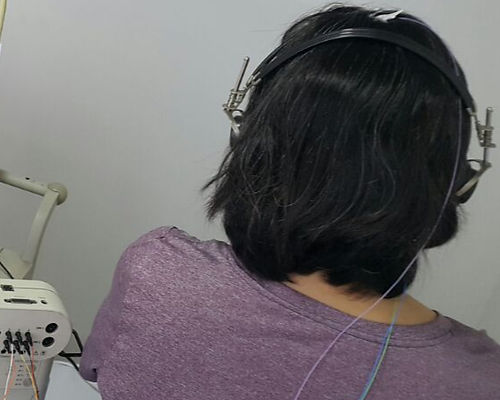
How is it made?
It depends on the sensory pathway being examined:
-
Visual: Brain reception in response to visual stimuli (flashing lights) is analyzed.
-
Somatosensory: Brain reception in response to tactile stimuli is studied (electrodes are placed on certain areas of the skin).
-
Auditory: Brain reception in response to auditory stimuli is analyzed (a series of sounds are played).
During the study, the brain responses generated by the sensory stimuli are recorded. This lets us analyze the integrity of the stimulated sensory pathways.
During the test, a series of electrodes will be placed on your scalp and other parts of your body.